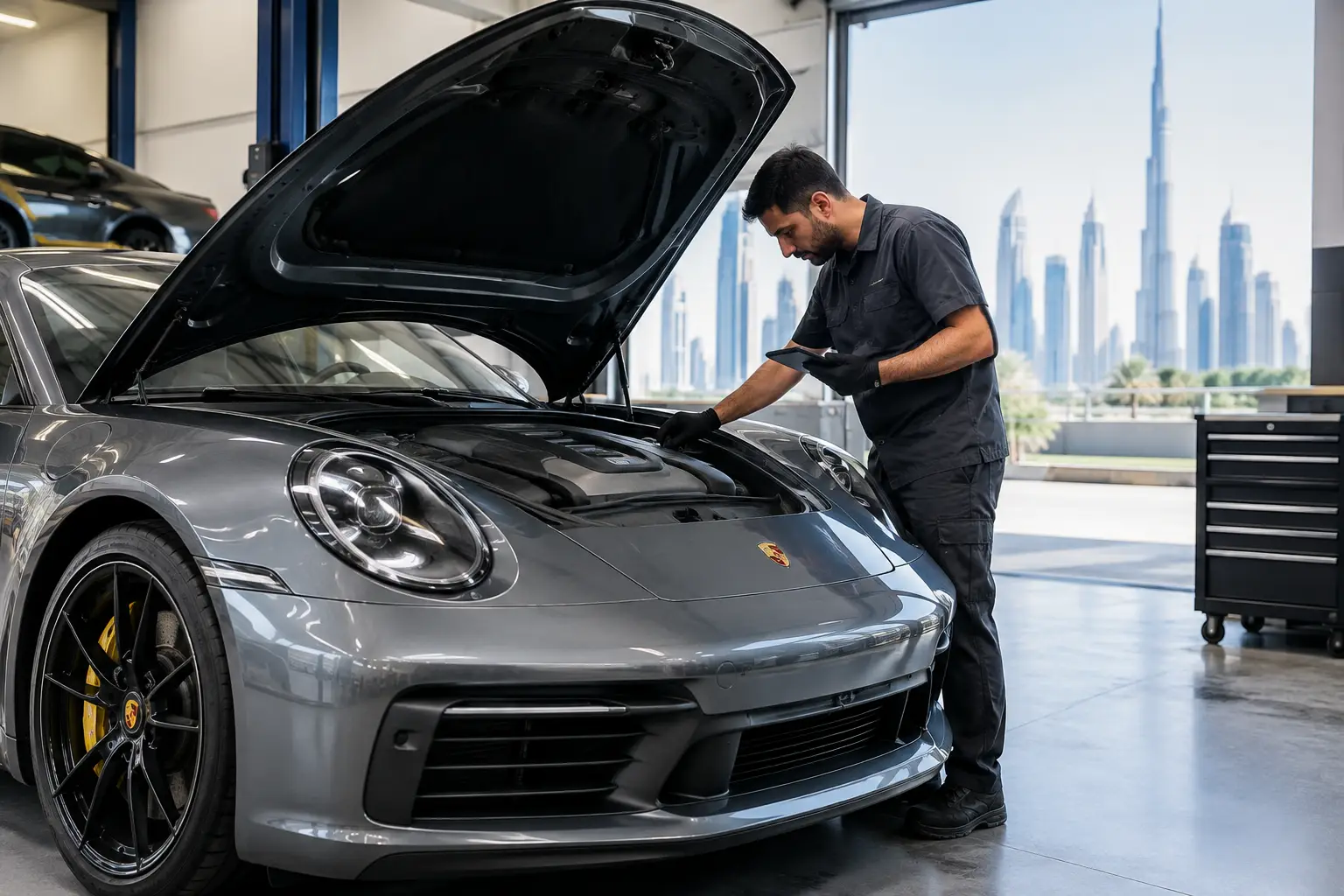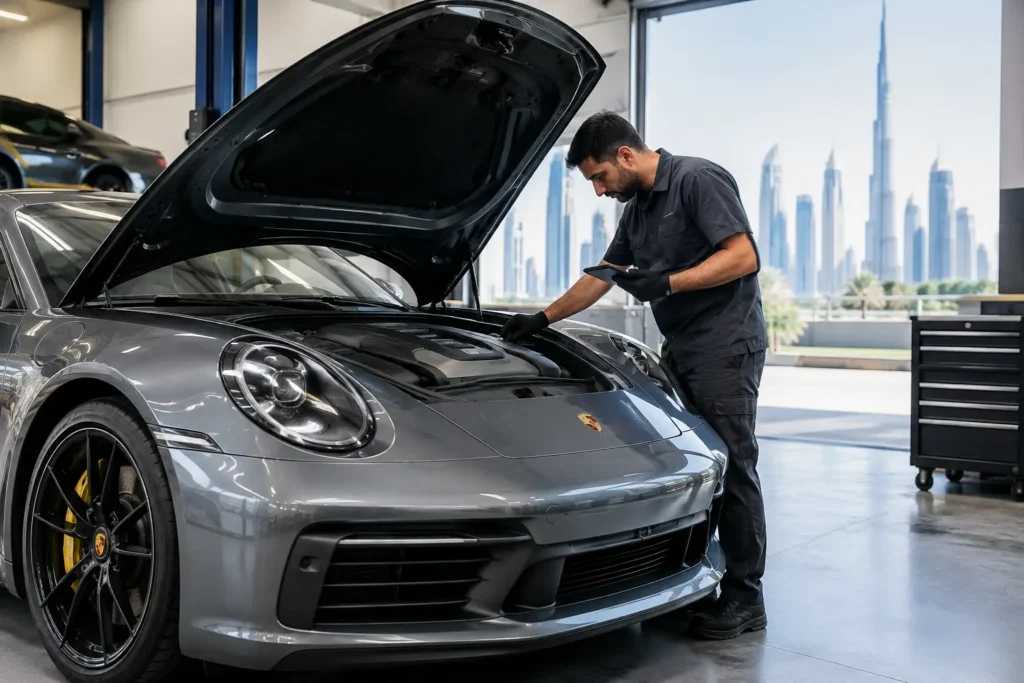
A Porsche rarely fails without giving its owner a few clues first. A warning light that appears briefly, a sharper shift than usual, an A/C system that takes too long to cool, or a noise over speed bumps can all be early signals. Porsche repair is not about replacing parts until a symptom disappears. It starts with identifying the cause, explaining what the car needs, and giving you a clear choice before work begins.
For Dubai owners, that approach matters. Extreme heat, heavy traffic, road debris, stop-start driving, and long highway runs place different demands on a performance car than a mild-climate service schedule assumes. Whether you drive a Macan for the school run, a Cayenne for family travel, a Panamera for business, or a 911 on weekends, accurate diagnosis protects both the car and your budget.
Porsche Repair Should Start With a Diagnosis
A Porsche is engineered as a system. The engine, transmission, cooling circuit, electronics, suspension, and control modules constantly exchange information. That is why a symptom that feels simple can have more than one possible cause.
Take a check-engine light. It may relate to a sensor, an ignition issue, an air leak, fuel delivery, emissions equipment, or a fault stored after a temporary voltage drop. Clearing the light without reading the fault codes, checking live data, and confirming the underlying condition may make the warning disappear for a day or two. It does not make the problem solved.
The same principle applies to noises. A clicking sound while turning may point to a driveline or suspension concern. A squeal during braking could be normal brake-pad wear indicators, but it could also involve discs, hardware, or contamination. A vibration at highway speeds may come from tire balance, wheel damage, alignment, or worn suspension components. Good repair work narrows down the evidence before recommending parts.
That process should be clear to the owner. You should know what was found, why the recommendation is being made, and what happens if the repair is delayed. You should also receive a quote that separates parts and labor. If inspection reveals additional work, it should be discussed and approved before the invoice changes.
Common Porsche Problems Dubai Drivers Should Not Ignore
Not every unusual feeling requires urgent repair. But waiting through a warning sign can turn a manageable service visit into a recovery truck call, particularly during summer. The following issues deserve prompt attention.
Cooling and A/C performance
When outside temperatures are high, the A/C system is not a convenience. It is essential. Weak cooling can result from low refrigerant, a leaking line or seal, a failing compressor, a blocked condenser, an electrical issue, or a cabin filter that is restricting airflow. Adding refrigerant without locating a leak may restore cold air temporarily, but it leaves the real fault in place.
Engine cooling needs the same attention. A rising temperature gauge, coolant warning, visible leak, sweet smell, or cooling fan running excessively should be checked quickly. Continuing to drive an overheating engine risks severe and expensive damage.
Transmission behavior that has changed
Porsche PDK transmissions are known for quick, controlled shifts. If the car hesitates when selecting drive or reverse, shifts harshly, slips under acceleration, displays a transmission warning, or develops a fluid leak, it needs a proper inspection. The answer may range from fluid service or an adaptation issue to a sensor, mechatronic, or internal transmission concern.
There is no responsible one-line answer without diagnostics. The repair path depends on fault codes, fluid condition, road-test behavior, service history, and the specific Porsche model. A workshop should tell you what it knows, what still needs testing, and why.
Electrical faults and warning messages
Modern Porsches rely on a large network of modules, sensors, cameras, actuators, and wiring. A low or weak battery can produce a surprising number of warning messages, especially after the car has been parked for extended periods. Other faults may involve charging systems, door locks, infotainment, parking sensors, lighting, air suspension controls, or engine-management components.
Electrical diagnosis should not begin with guesswork. A technician needs to test battery health and charging voltage, scan relevant control units, inspect wiring where appropriate, and confirm a repair rather than simply erase codes. This takes time, but it is less expensive than repeatedly replacing parts that were never faulty.
Suspension, steering, and brake concerns
Dubai roads can be smooth one moment and punishing the next. Potholes, sharp ramps, curbs, and repeated high-speed road use all affect tires, wheels, bushings, control arms, shocks, and alignment. If the steering pulls, the vehicle wanders, the ride has become harsh, or you hear knocking over uneven surfaces, book an inspection.
Brake wear also deserves more than a quick visual check. Brake pads, discs, calipers, brake fluid, hoses, and electronic wear sensors should be assessed as a complete system. Performance braking components can be costly, so the right measurement and an honest explanation are far more useful than a vague recommendation to replace everything.
The Difference Between Maintenance and Repair
Scheduled maintenance is planned work based on mileage, time, vehicle condition, and manufacturer guidance. It may include oil and filter service, brake-fluid replacement, spark plugs, air filters, inspections, and fluid checks. Repair addresses a confirmed fault or a worn component that is no longer performing as it should.
The distinction matters because it protects you from two common problems: ignoring items that genuinely need attention and paying for work that is not yet necessary. A car with low brake-pad material needs action. A car with brake pads that are still within safe service limits may only need monitoring. The best recommendation is based on measured condition, not a blanket sales target.
Service intervals can also vary in real use. A Porsche driven mainly on short trips in heavy traffic faces different conditions from one driven regularly on open highways. Vehicles that sit for long periods may need battery care, tire checks, and fluid inspection even when mileage is low. A thoughtful service plan looks at how the vehicle is actually used.
What a Transparent Porsche Repair Process Looks Like
A professional workshop experience should reduce uncertainty, not add to it. The process is straightforward: inspect the concern, diagnose the cause, provide an itemized estimate, obtain approval, complete the repair, and verify the result.
Parts choices should be explained clearly. In some cases, genuine parts are the appropriate choice. In others, a high-grade OEM-equivalent part may offer good value without compromising the repair. The right decision depends on the component, model, warranty considerations, and how long you plan to keep the car. What matters is that the option is presented honestly, not hidden inside an unexplained total.
Ask to see worn or replaced components when practical. Retaining old parts for inspection is a simple sign of accountability. It gives owners a chance to understand what was changed and helps remove the doubt that too often surrounds auto repair.
Convenience matters too. A repair should not require you to lose a full workday arranging transport, waiting for updates, and collecting the vehicle. For busy Dubai households and professionals, vehicle collection and return can make routine service and unexpected repairs far easier to manage. The Car Dr’s combines this convenience with diagnosis-led work, clear approval before added repairs, and communication that respects the owner’s time.
When to Book Porsche Repair Immediately
Stop driving and arrange assistance if the engine temperature is climbing, a red warning message appears, oil pressure is low, brake performance changes sharply, smoke is visible, or the vehicle has a serious fluid leak. These are not conditions to test on another commute.
For less urgent concerns, do not wait for the next scheduled service if a warning light persists, the car drives differently, the A/C loses effectiveness, or a new noise develops. Booking early often gives technicians a better chance to diagnose an intermittent issue before it becomes constant.
Your Porsche does not need dramatic symptoms to deserve attention. A small change in how it starts, cools, shifts, stops, or rides is useful information. Address it while the repair is still a controlled decision, not an interruption to your week.