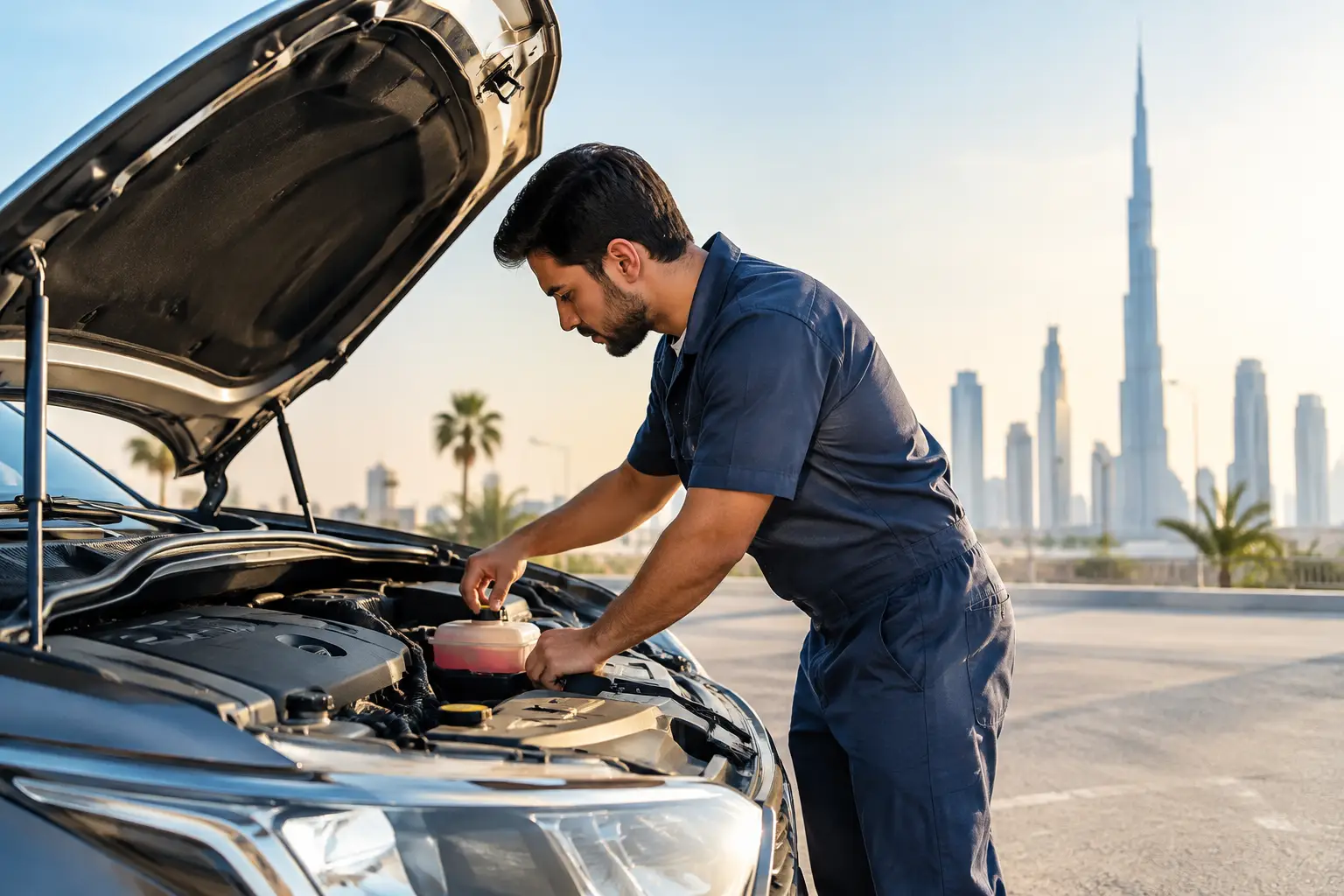
A temperature gauge climbing above normal in Dubai traffic is not a warning to ignore until the weekend. With high ambient heat, long idling periods, and A/C working hard for much of the year, a small cooling-system fault can become an overheating event quickly. A proper radiator repair service Dubai drivers can rely on begins by finding the real cause of lost coolant or rising temperature, not simply topping up the reservoir and sending the car back onto the road.
The radiator is only one part of a cooling system that includes hoses, a water pump, thermostat, cooling fans, pressure cap, expansion tank, coolant passages, and sensors. Any of them can produce similar symptoms. That is why diagnosis matters before pricing and why a cheap-looking fix can become expensive when the underlying fault is missed.
When Your Car Needs Radiator Repair Service Dubai
Coolant leaks are often the first sign. You may notice a pink, green, blue, or orange puddle beneath the car, depending on the coolant used, or a sweet smell after parking. However, not every leak reaches the ground. Coolant can dry on a hot engine, collect under the engine cover, or leak internally where it is harder to spot.
Pay attention if the temperature needle rises above its usual position, a coolant warning appears, the A/C becomes less effective while stationary, or the cabin heater starts blowing cold air when it should be warm. Steam from the hood is a more urgent signal. Pull over safely, switch off the engine, and do not open the radiator or coolant cap while the system is hot. Pressurized coolant can cause serious burns.
An overheating engine is not always caused by a failed radiator. A fan that does not engage in traffic, a thermostat stuck closed, a worn water pump, a blocked coolant passage, or a faulty pressure cap can all create the same problem. On modern vehicles, incorrect temperature-sensor readings, wiring faults, or ECU-related fan-control issues may also need attention. Replacing a radiator without testing these areas is not diagnosis-led repair.
Why Dubai Heat Makes Cooling Faults Less Forgiving
A healthy cooling system is designed to manage heat, but it has less margin for error during a Dubai summer. Stop-and-go driving adds stress because there is less natural airflow through the radiator. The electric cooling fans must do more work, while the A/C condenser adds heat in front of the radiator.
Dust, road debris, and external contamination can restrict airflow through the radiator and condenser fins. Internally, the radiator can gradually lose efficiency when the wrong coolant is mixed, tap water is repeatedly added, or corrosion and sediment build up in the system. A radiator may look acceptable from the outside while its internal passages are partially restricted.
Vehicle age and design also matter. An older Japanese sedan with a visible hose leak may need a straightforward repair. A German executive car, luxury SUV, or performance vehicle may have a more complex cooling layout, electronically controlled thermostats, auxiliary pumps, active grille shutters, or multiple radiators. EVs also use thermal-management circuits to control battery, motor, and cabin-system temperatures. The repair approach should fit the vehicle, rather than applying one answer to every car.
What a Proper Cooling-System Diagnosis Looks Like
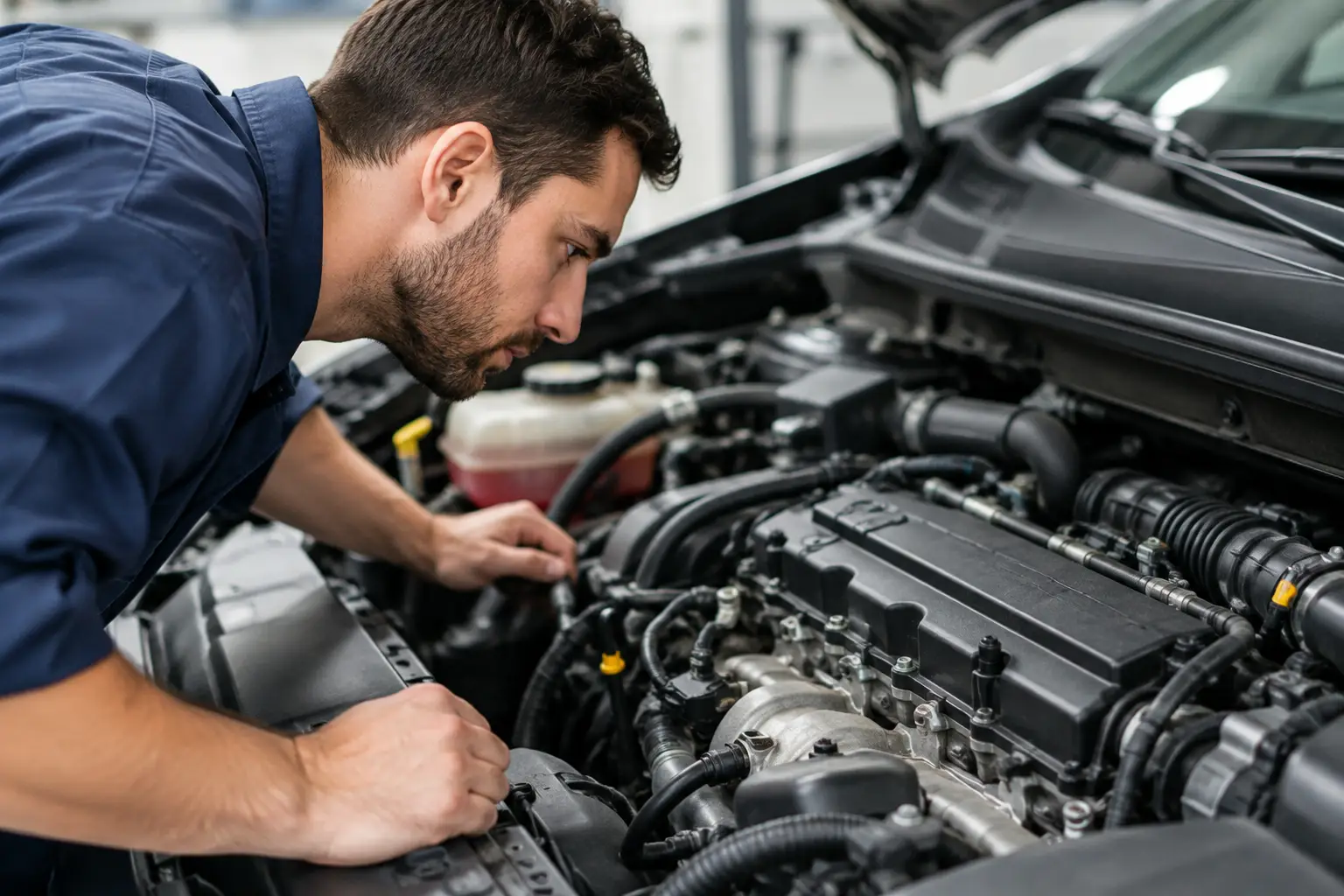
A trustworthy workshop should be able to explain what it tested and what the results mean. The process normally starts with a visual inspection for staining, damaged hoses, loose clamps, cracked plastic tanks, corroded fittings, and impact damage to the radiator core.
Next, the system may be pressure-tested to expose leaks that only appear when coolant is under operating pressure. The technician should inspect the radiator cap or expansion-tank cap because a cap that cannot maintain pressure lowers the coolant boiling point and can contribute to overheating.
Cooling-fan operation is checked at the correct temperature and with the A/C running. Technicians may use diagnostic equipment to review coolant-temperature readings, fan commands, stored fault codes, and related electrical data. If coolant loss is suspected but no external leak is visible, further testing may be necessary to rule out an internal engine issue.
That distinction protects the customer. For example, persistent coolant loss with white exhaust smoke, contaminated oil, misfires on startup, or repeated overheating may point beyond the radiator. It does not automatically mean a major engine repair is required, but it does mean a quick radiator replacement should not be presented as a guaranteed solution without evidence.
Repair, Flush, or Replace the Radiator?
The right option depends on the fault, the radiator construction, and the condition of the rest of the system. A loose hose clamp, damaged hose, weak cap, or failed fan can often be repaired without replacing the radiator. If the coolant is contaminated but the radiator is structurally sound, a carefully performed flush and refill with the manufacturer-appropriate coolant may be appropriate.
A radiator replacement is usually the better choice when there is a cracked plastic end tank, a corroded or leaking core, significant collision damage, or internal blockage that cannot be reliably cleared. Modern aluminum-and-plastic radiators are commonly replaced rather than patched because a temporary repair may not hold under pressure and heat.
Part quality matters here. An inexpensive radiator that fits poorly, has weak joints, or lacks the correct cooling capacity can create another problem soon after installation. The sensible choice is a genuine part or a high-grade replacement that matches the vehicle’s requirements. The same care applies to coolant. Mixing incompatible coolant types can reduce corrosion protection and damage components over time.
After a repair, the system should be filled correctly, air bled from the circuit, brought to operating temperature, and checked again for leaks and fan operation. An air pocket left in the system can cause temperature spikes and poor cabin heat, even after a new radiator has been fitted.
Clear Pricing Before Cooling-System Work Begins
Radiator repairs often become frustrating when an owner is told only that the car is overheating, then receives a vague invoice after work is complete. A better process is inspect, diagnose, quote, approve, repair, and verify.
Before work begins, ask for the diagnosed fault in plain language and a quote that separates parts from labor. If the inspection identifies another issue, such as a thermostat or water pump problem, you should be told why it is relevant and asked for approval before additional work proceeds. Where parts are replaced, retaining the old components for inspection adds another layer of accountability.
At The Car Dr’s, this approach is paired with complimentary Dubai-wide collection and return, so addressing a cooling issue does not have to consume a workday. That is especially useful when the car is unsafe to drive because of overheating or repeated coolant loss.
Avoid Turning a Small Leak Into Engine Damage
Checking coolant level occasionally, using the correct coolant, and acting on a temperature warning promptly can prevent many major repairs. Do not rely on repeated top-ups as a long-term solution. Coolant has gone somewhere, and the cause needs to be identified.
If your temperature gauge rises, pull over before the warning becomes steam from the hood. Let the engine cool fully, arrange an inspection, and ask for the evidence behind the recommended repair. A clear diagnosis now is usually far less costly than an overheated engine later.