A check engine light can appear on an otherwise normal drive down Sheikh Zayed Road, then leave you wondering whether you can safely make the trip home. That uncertainty is exactly why check engine light diagnosis Dubai drivers receive should go beyond plugging in a scanner and reading out a code. A fault code points a technician toward a system. It does not automatically identify the failed part.
The difference matters. Replacing parts based on a guess can turn a manageable repair into an expensive sequence of unnecessary invoices. A proper diagnosis identifies the cause, explains the options in plain language, and gives you a parts-and-labor quote before repair work starts.
What the Check Engine Light Is Actually Telling You
The check engine light is connected to your vehicle’s engine control unit, often called the ECU. The ECU monitors hundreds of readings from sensors, fuel delivery components, ignition systems, emissions equipment, air intake parts, and on many modern cars, transmission-related systems.
When a reading falls outside its expected range, the ECU stores a diagnostic trouble code and may switch on the warning light. The code could relate to something relatively simple, such as a loose fuel cap or a small air leak. It could also point to a misfire, failing ignition coil, fuel-system issue, turbocharger fault, catalytic converter problem, or an electrical communication error.
That is why a code such as “cylinder misfire detected” should not be treated as a verdict that one component must be replaced. The cause could be a spark plug, coil, injector, vacuum leak, compression issue, wiring fault, or even contaminated fuel. Testing separates evidence from assumption.
Steady Light or Flashing Light: Know the Difference
A steady check engine light usually means the car has detected a fault that needs attention, but it may still be safe to drive cautiously for a short distance. Do not ignore it for weeks. A minor running issue can put added strain on other components, increase fuel consumption, and develop into a larger repair.
A flashing check engine light is more urgent. It commonly indicates an active misfire that can send unburned fuel into the exhaust system and damage the catalytic converter. If the engine is shaking, lacking power, smelling strongly of fuel, overheating, or making unfamiliar mechanical noises, pull over safely and stop driving.
The same applies when the warning light appears with an oil pressure warning, high temperature warning, or serious loss of power. Continuing to drive in those conditions can turn a diagnostic appointment into an engine or transmission rebuild.
Why Dubai Driving Can Bring Faults to the Surface
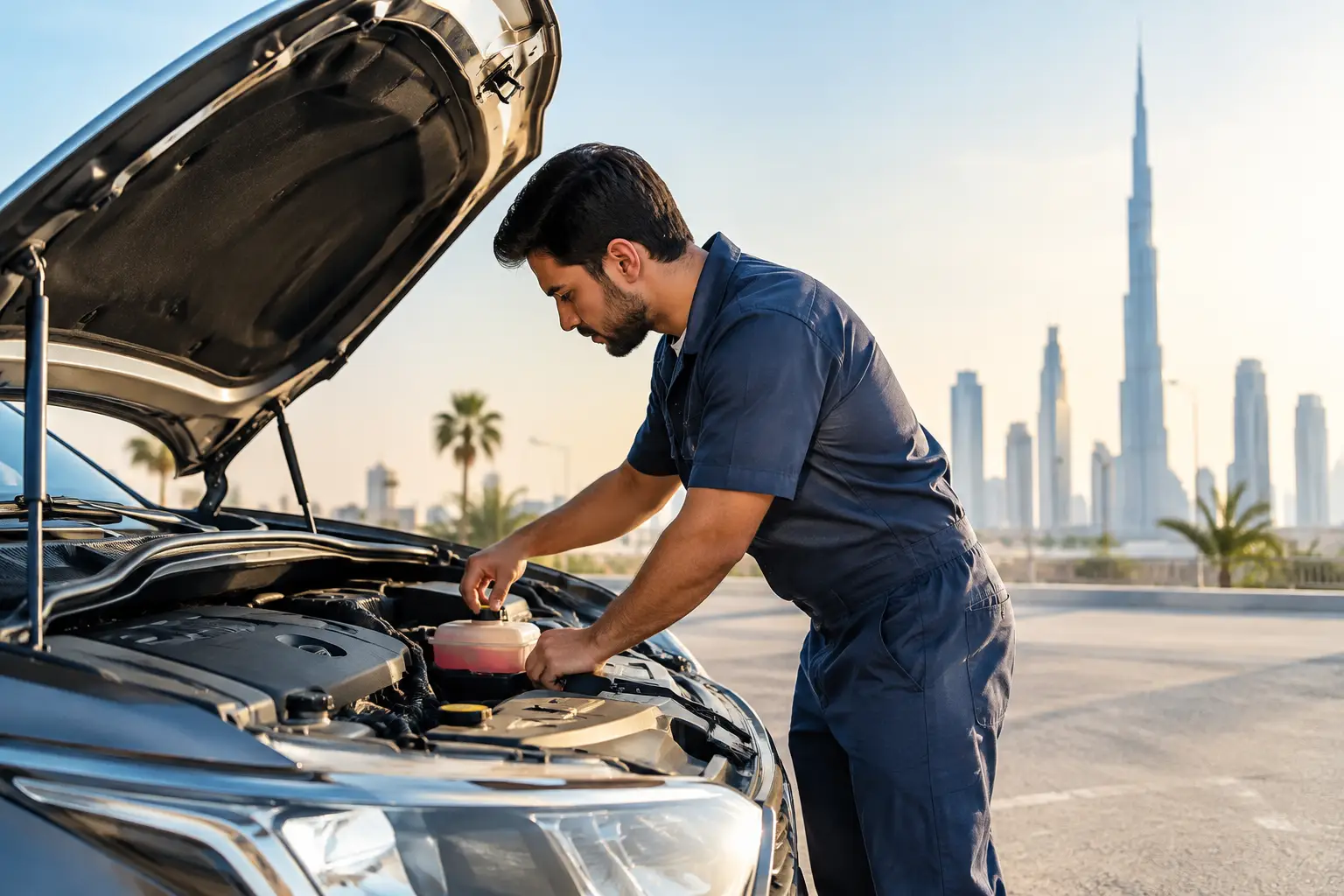
Dubai conditions are demanding on every type of vehicle, from a daily-driven Japanese sedan to a German executive car, a British SUV, or an electric performance vehicle. Extreme heat places pressure on cooling systems, batteries, sensors, wiring insulation, and A/C-related electronics. Stop-start traffic, long idling periods, and short trips can also expose underlying issues that may not be obvious on an open highway.
Dust and sand are another factor. A blocked air filter, compromised intake seal, dirty sensor, or debris around electrical connectors can affect engine readings. High ambient temperatures can make weak ignition coils, aging batteries, and cooling-system faults show themselves much sooner.
Fuel quality is generally well controlled, but a vehicle with carbon buildup, a weak injector, or an existing fuel-system problem may still develop hesitation or misfire symptoms. The right repair depends on the vehicle, the stored codes, live data, and physical inspection. There is no one-size-fits-all answer.
What Proper Check Engine Light Diagnosis in Dubai Looks Like
A useful diagnostic process starts with listening. When did the light come on? Is the car hard to start? Does it hesitate under acceleration, vibrate at idle, lose fuel economy, or show the warning only after refueling? Those details help narrow the investigation before any component is touched.
The next step is a professional scan of the ECU and related modules. A technician reads stored, pending, and history codes, along with freeze-frame data. Freeze-frame data captures the vehicle conditions when the fault was logged, such as engine temperature, speed, RPM, and load. It can reveal whether a fault happens during cold starts, highway acceleration, or hot idle.
From there, diagnosis should use live data and targeted testing. Depending on the code and vehicle, this may include checking fuel trims, oxygen sensor signals, ignition performance, battery voltage, charging output, compression, intake leaks, injector operation, wiring continuity, or network communication between control modules.
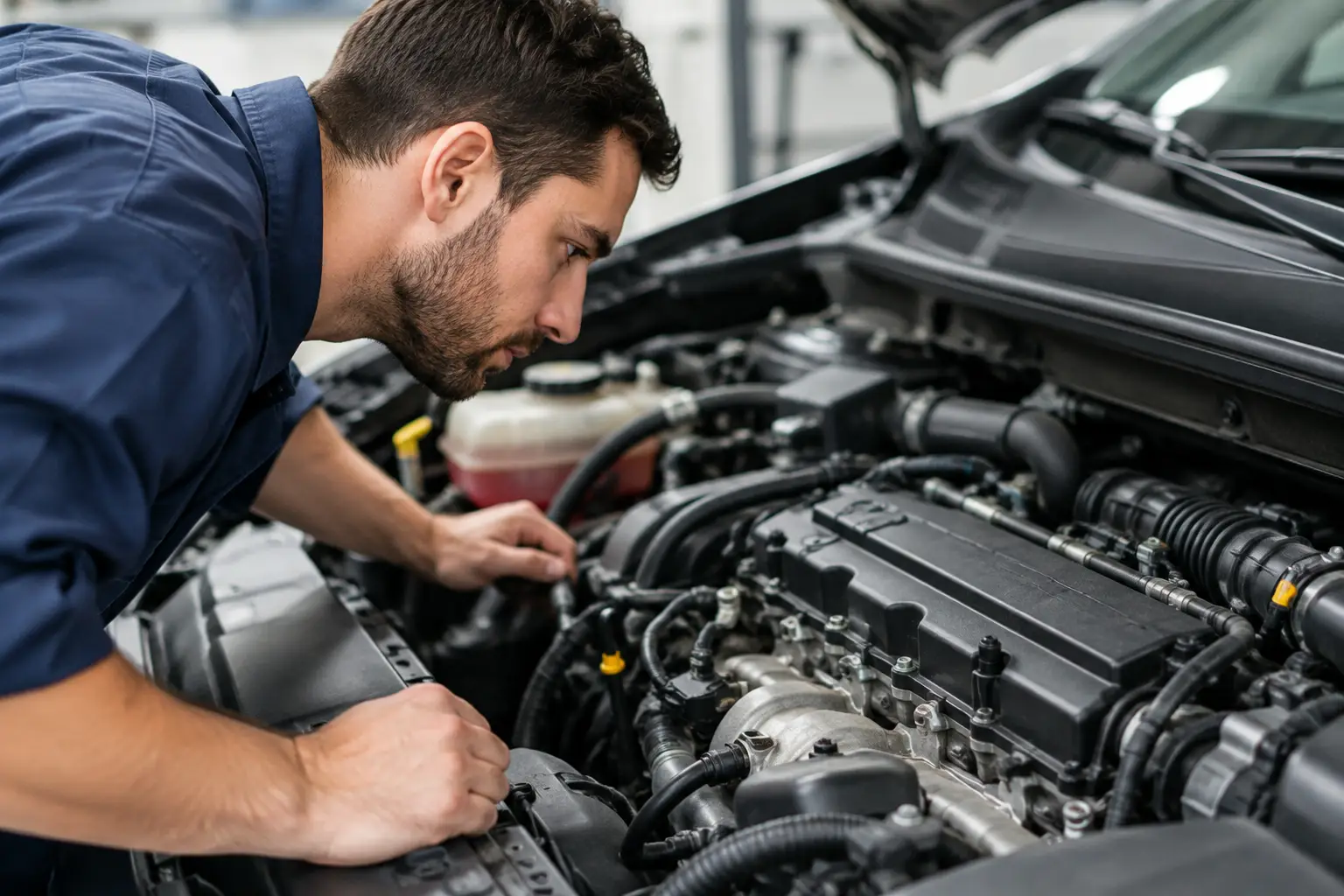
A visual inspection remains essential. Cracked hoses, damaged connectors, oil in spark plug wells, coolant leaks, rodent-damaged wiring, and loose intake pipes do not always announce themselves through a code alone.
Only after the fault is confirmed should a repair recommendation be made. If multiple issues are found, they should be explained in order of urgency. You should know what requires immediate attention, what can be monitored, and what is preventive rather than essential.
Avoid the Costly “Clear the Code and See” Approach
Clearing the check engine light without fixing the underlying issue does not repair the vehicle. It simply erases the stored information temporarily. The light may return after a few minutes, a few drive cycles, or when the same conditions happen again.
This approach can also make diagnosis harder. The stored data may contain useful clues about the original fault. If you need an emissions or registration-related inspection, a recently cleared ECU may show incomplete readiness monitors, even if the dashboard light is off.
Similarly, replacing the most common part associated with a code is not always economical. An oxygen sensor code, for example, might be caused by the sensor itself, but it could also result from an exhaust leak, wiring damage, incorrect air-fuel mixture, or a problem upstream in the engine. A lower-priced repair that does not solve the issue is not a saving.
What You Can Do Before Bringing the Car In
Do not disconnect the battery or repeatedly clear the code if you can avoid it. Instead, take a photo of the dashboard warning and make a note of any symptoms. Include whether the vehicle was hot or cold, whether the A/C was running, whether you had just fueled up, and whether the problem occurs while idling, braking, or accelerating.
You can check that the fuel cap is properly fitted, particularly if the light appeared soon after filling the tank. Beyond that, avoid opening engine components or adding chemical treatments without a diagnosis. Some additives may be unsuitable for certain engines, fuel systems, or emissions components.
If the car drives normally and the light is steady, arrange an inspection promptly. If it flashes or the vehicle feels unsafe, do not take chances with a long drive across the city. Vehicle collection and return can remove that pressure while the workshop handles the testing.
The Questions You Should Be Able to Ask a Workshop
You do not need to be a technician to expect clear answers. A professional workshop should be able to explain what code was found, what tests support the diagnosis, and whether the recommended repair is urgent. It should also distinguish between a confirmed failure and a part that is simply worth monitoring.
Before authorizing work, ask for the quoted parts cost and labor cost separately. If additional faults appear during repair, approval should be requested before extra work begins. For parts being replaced, it is reasonable to ask to see the old parts afterward, especially on higher-value repairs.
At The Car Dr’s, that customer-protective process is central: inspect, diagnose, quote, approve, repair, and return the vehicle. Whether the issue is on a family SUV, a fleet vehicle, a luxury sedan, or a performance car, the goal is the same – fix the confirmed problem without making your time or your budget absorb the cost of guesswork.
A warning light is not a reason to panic, but it is a reason to act while you still have options. Get the fault properly tested, ask for a clear explanation, and make the repair decision with evidence in front of you.