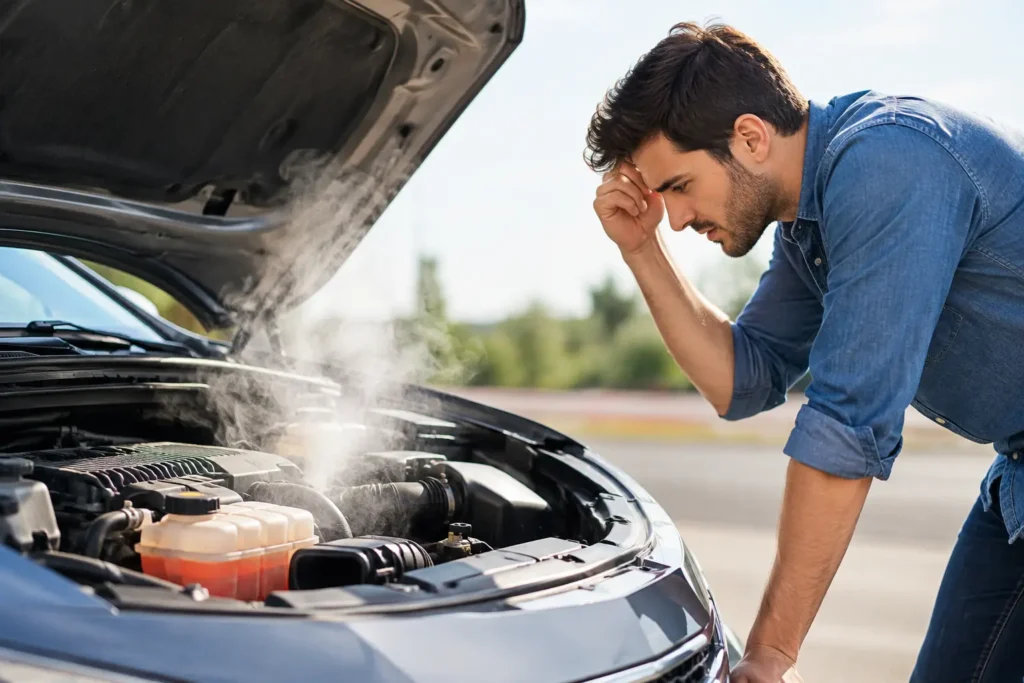
A temperature gauge climbing past its normal position in traffic is not a warning to finish one more errand. It is a sign to act. Car overheating causes can be as simple as low coolant or as serious as a failed water pump, cracked cylinder head, or internal engine leak. In Dubai heat, a cooling-system weakness that seems minor in the morning can become a roadside breakdown by the afternoon.
The cost difference between stopping early and driving while overheated can be substantial. A hose or thermostat repair is one category of job. Engine damage caused by repeated overheating is another. The right response starts with knowing what the warning signs mean and avoiding the shortcuts that make the damage worse.
Why an overheating engine needs immediate attention
Your engine produces intense heat every time it runs. Coolant carries that heat through the engine, the radiator releases it into the air, and the water pump keeps the system circulating. The thermostat controls when coolant flows to the radiator, while fans maintain airflow when the vehicle is stationary or moving slowly.
If any part of that system cannot do its job, the temperature rises. Modern cars may display a temperature warning light, a message on the instrument cluster, reduced engine power, or a warning to stop safely. Older vehicles may show the needle pushing into the red.
Do not rely on the absence of steam. An engine can be dangerously hot before visible steam appears. Likewise, turning the air conditioning off may reduce some load on the engine, but it does not fix the reason the vehicle is overheating.
The most common car overheating causes
Low coolant or an external coolant leak
Low coolant is one of the most common reasons a car overheats. Coolant does not normally disappear without explanation. A leak may be coming from a radiator hose, hose clamp, radiator, expansion tank, water pump, heater hose, or a worn gasket.
You may notice a sweet smell, a puddle under the car, white or pink residue around cooling-system components, or a coolant-level warning. However, slow leaks can evaporate on hot engine parts before they reach the ground. That is why a cooling-system pressure test is often more useful than a visual check alone.
Topping up coolant may get the vehicle moving temporarily, but it should never be treated as a repair. Mixing incompatible coolant types or repeatedly adding plain water can create corrosion and reduce the cooling system’s protection.
A stuck thermostat
The thermostat is a small component with a major responsibility. When the engine is cold, it stays closed to help the engine reach operating temperature. Once the engine warms up, it opens so coolant can move through the radiator.
If it sticks closed, hot coolant remains trapped in the engine. The temperature can climb quickly, sometimes after only a short drive. A thermostat can also stick partly open, which may cause the engine to run too cool and affect efficiency, but a closed thermostat is the more urgent failure.
Failed radiator fan or fan control fault
If your car overheats mostly in traffic, at idle, or while parked with the engine running, the radiator fan should be high on the diagnostic list. At highway speed, airflow naturally passes through the radiator. In slow-moving traffic, the electric fan must create that airflow.
The fault could be the fan motor, fuse, relay, wiring, temperature sensor, control module, or the fan command from the ECU. On some vehicles, an A/C problem and an overheating issue can overlap because the cooling fan supports both systems. Replacing the fan without testing its power supply and control signal can lead to an unnecessary bill.
A damaged or blocked radiator
A radiator transfers heat from coolant to outside air. Internal corrosion, sediment, incorrect coolant, and neglected maintenance can restrict coolant flow through its passages. External blockage is also possible. Dust, sand, leaves, and damaged fins can reduce airflow across the radiator and A/C condenser.
This is particularly relevant in harsh, hot conditions. A vehicle may behave normally on a short trip but run hot under heavier load, during long idling periods, or on a steep climb. The radiator may need cleaning, repair, or replacement, depending on what inspection and flow testing show.
Water pump failure
The water pump circulates coolant through the engine and radiator. A failing pump may leak from its seal, make a whining or grinding noise, develop pulley play, or simply fail to circulate coolant effectively.
Some engines use a belt-driven pump, while others use an electric pump controlled by the vehicle’s electronics. Diagnosis depends on the vehicle design. A technician may check for leaks, circulation, belt condition, pump operation, fault codes, and temperature differences across the cooling system before confirming the pump is at fault.
Collapsed hoses, pressure-cap faults, or trapped air
Cooling systems operate under pressure, which raises the coolant’s boiling point. A weak radiator cap or expansion-tank cap may fail to hold that pressure, allowing coolant to boil or escape earlier than it should. A soft hose can collapse internally and restrict flow, even when it looks acceptable from the outside.
Air trapped in the system after a coolant repair can also cause intermittent overheating. Some vehicles require a specific bleeding process, especially those with complex cooling circuits, rear-mounted radiators, turbochargers, or electric pumps. Filling the reservoir and hoping for the best is not a proper bleed procedure.
Internal engine problems
Not every overheating issue begins in the radiator. A failed head gasket, cracked cylinder head, or cracked engine block can allow combustion gases into the cooling system or coolant into the engine. Possible signs include persistent coolant loss without an obvious external leak, bubbles in the coolant reservoir, white exhaust smoke, oil that looks milky, rough running, or repeated overheating after cooling-system repairs.
These symptoms require careful testing, not guesswork. A pressure test, combustion-gas test, compression test, or cylinder leak-down test may be needed. An internal engine fault is serious, but replacing major engine components before confirming the diagnosis is equally serious for your budget.
What to do when your car starts overheating
If the temperature warning appears, reduce load immediately. Turn off the A/C, switch off cruise control, and find a safe place to pull over as soon as possible. If the gauge continues rising or steam is visible, stop the engine.
Do not open the radiator cap or coolant reservoir cap while the engine is hot. Pressurized coolant can spray out and cause severe burns. Wait until the engine has cooled fully before checking the coolant level, and do not pour cold water onto a hot engine.
If you are in an unsafe position and must move a very short distance, use the cabin heater at maximum temperature and fan speed to draw some heat away from the engine. This is an emergency measure only, not permission to keep driving. A tow or vehicle collection is usually the safer decision when the warning persists.
Why diagnosis matters more than a quick refill
Cooling problems can share the same symptom but have very different causes. A vehicle with low coolant might have a leaking hose. Another might have a failing pump, a fan-control issue, or combustion gases entering the cooling system. Replacing parts based on assumptions can create repeat visits and unnecessary cost.
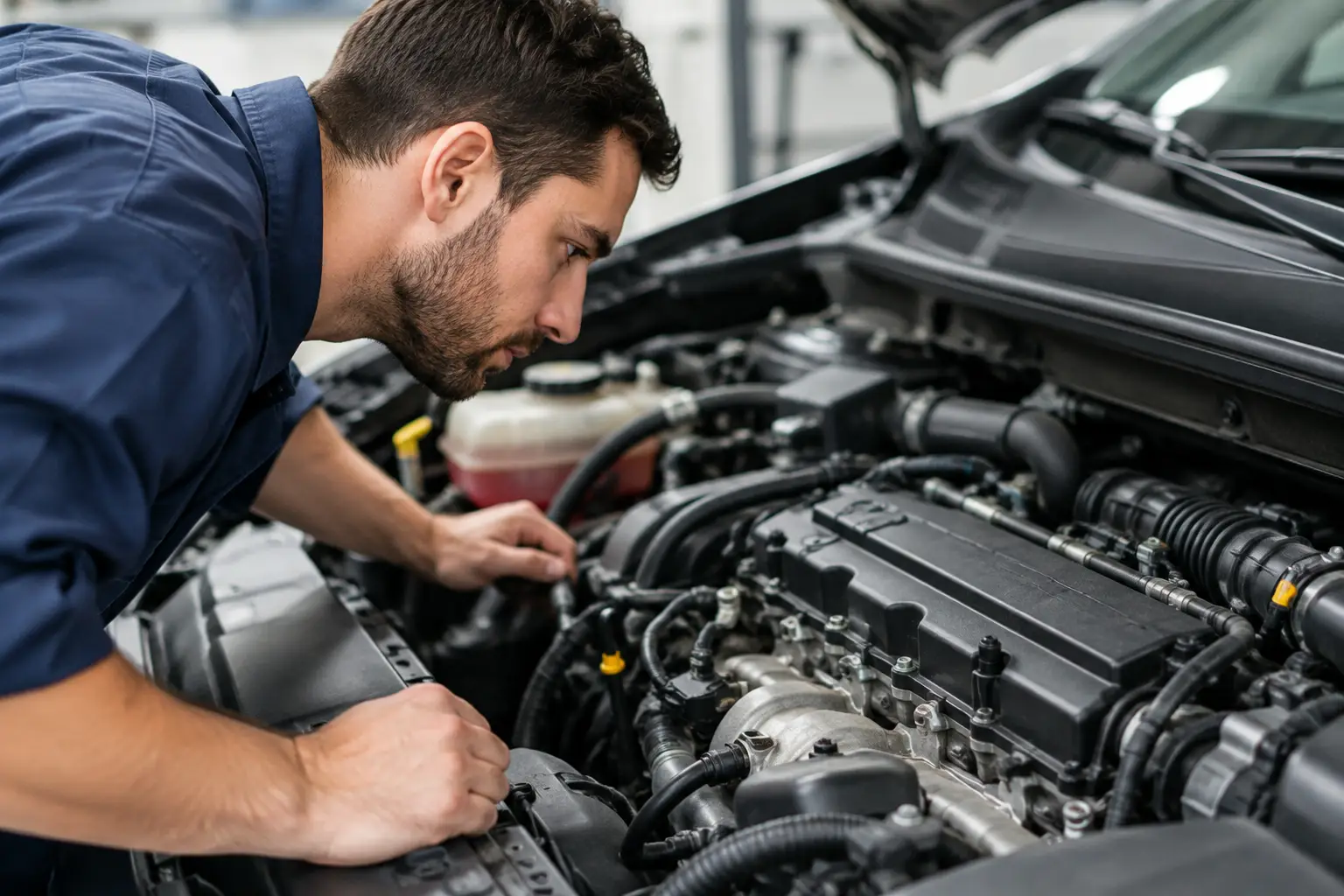
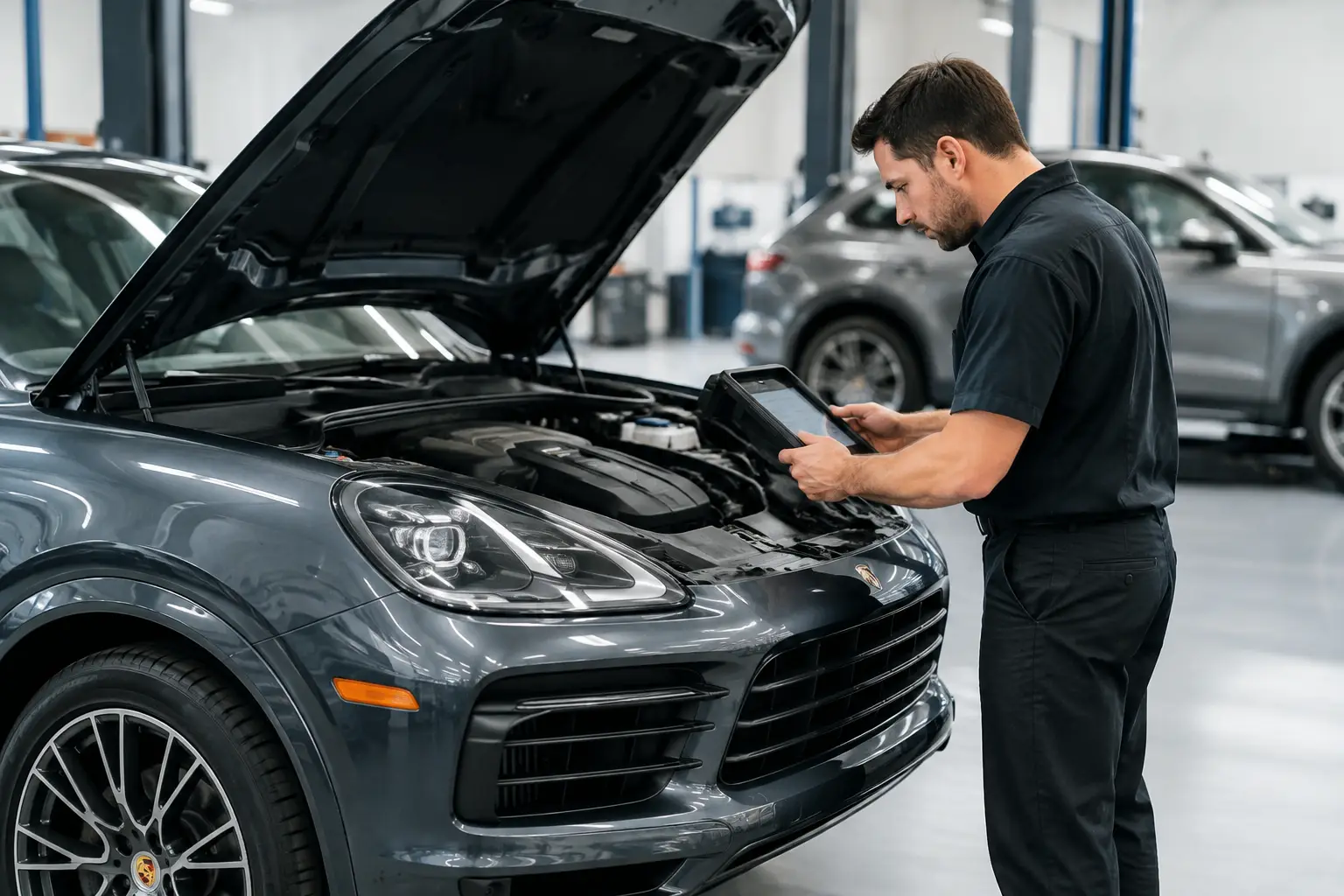
A proper inspection should identify the source of coolant loss, test system pressure, verify fan operation, assess thermostat behavior, check radiator condition, and scan for relevant fault codes where applicable. If internal engine damage is suspected, the workshop should explain which tests are needed and why.
At The Car Dr’s, the practical approach is diagnosis before pricing: identify the fault, separate parts and labor in the quote, and request approval before additional work begins. That gives owners a clear choice instead of an unexpected invoice after the repair is underway.
Prevent overheating before the gauge moves
Preventive servicing is less dramatic than a breakdown, but it is far easier on the engine and your schedule. Check coolant level only when the engine is cold, and investigate any repeated drop in level. Follow the manufacturer-recommended coolant specification rather than choosing fluid by color alone.
Have aging hoses, belts, caps, and radiator condition inspected during routine service, particularly before the hottest months or a long road trip. If your vehicle has previously overheated, ask for the actual cause to be documented. “Coolant topped up” is not a diagnosis.
Fleet vehicles deserve even closer attention because long idling, stop-and-go routes, and high daily mileage expose small cooling-system faults quickly. Tracking temperature warnings and coolant-related repairs across the fleet can prevent the same failure from sidelining multiple vehicles.
A cooling warning is your vehicle asking for attention before it becomes an engine repair. Stop early, let the system cool safely, and insist on a diagnosis that explains the cause before anyone starts replacing parts.