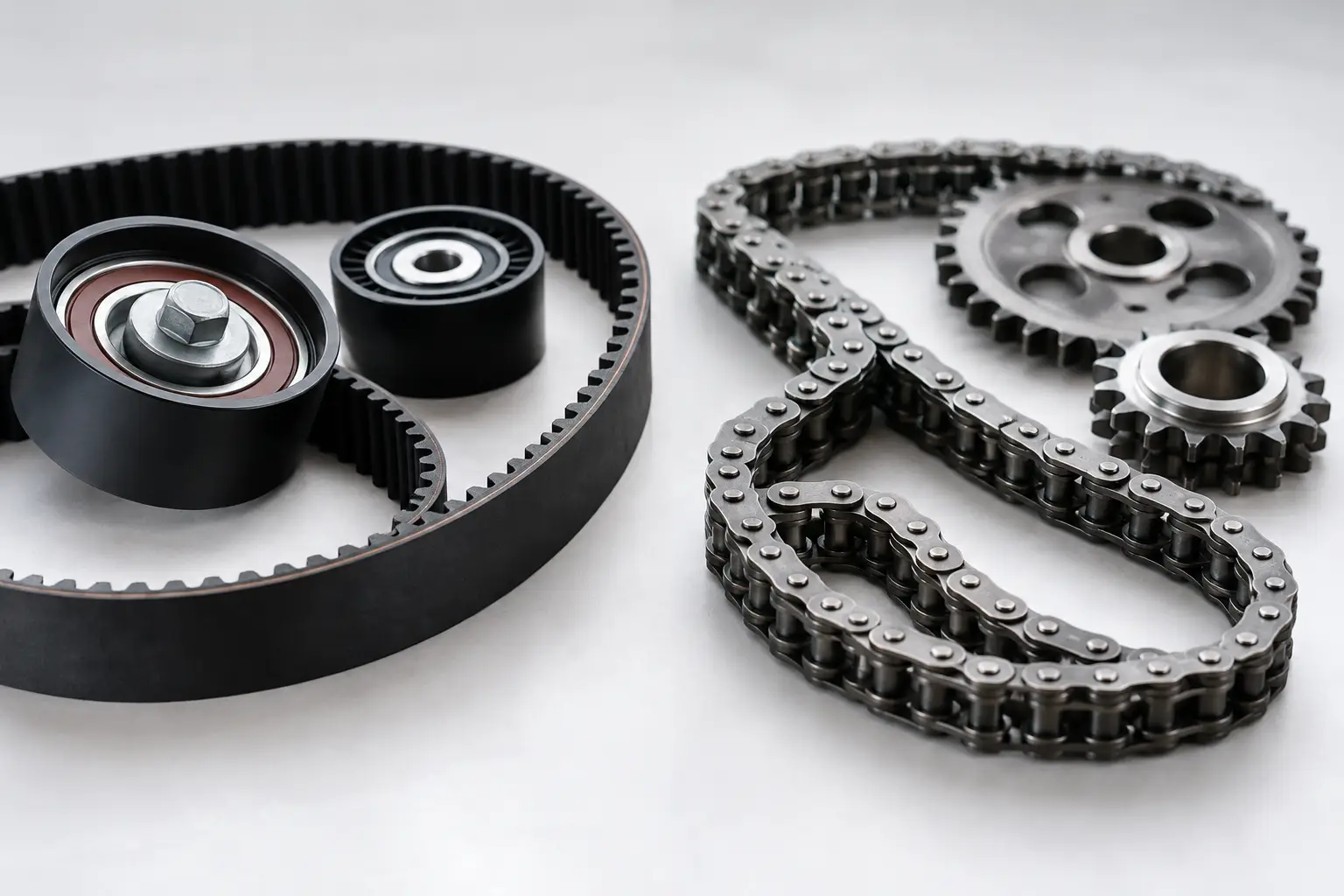
A timing belt versus chain question usually comes up at the worst possible moment: a service advisor has mentioned a major repair, the engine has developed a noise, or a dashboard warning has made a routine drive feel less routine. The part itself is out of sight, but it plays a central role in keeping the engine running correctly. Getting the decision wrong can be expensive. Getting it checked early is usually straightforward.
Your vehicle has either a timing belt, a timing chain, or, in a small number of engines, timing gears. All perform the same basic job. They synchronize the crankshaft with the camshaft so the engine’s valves open and close at precisely the right time. When that timing slips or fails, the engine may run poorly, refuse to start, or suffer serious internal damage.
Timing Belt Versus Chain: The Core Difference
A timing belt is a reinforced rubber belt with molded teeth. It runs inside a protective cover and is designed to be replaced at a specified interval. A timing chain is metal and operates inside the engine, lubricated by engine oil. It is generally designed to last longer, but it is not automatically a lifetime component.
The practical difference for an owner is maintenance planning. A belt has a predictable replacement schedule on most vehicles. A chain is condition-based in many cases, meaning it is inspected and diagnosed when symptoms, fault codes, service history, or engine noise point to a concern.
Neither design is universally better. A belt-driven engine can give years of reliable service when its replacement interval is respected. A chain-driven engine can also be reliable for a long time, provided oil changes are not neglected and the correct oil specification is used.
Why Timing Failure Can Be So Costly
Many modern engines are interference engines. In simple terms, the pistons and valves occupy part of the same space at different moments in the engine cycle. Correct timing prevents them from meeting.
If a timing belt breaks or a timing chain jumps far enough out of position, pistons can strike open valves. The result may include bent valves, damaged pistons, cylinder-head repairs, or a complete engine rebuild or replacement. Not every engine is an interference design, but it is never sensible to assume yours is safe without confirming it.
This is why replacing a worn belt before it fails is not a garage upsell. It is preventative maintenance with a clear purpose. The same principle applies to a stretched chain or failed chain tensioner: acting on verified warning signs is far less costly than waiting for an engine to stop.
Timing Belts: Planned Maintenance With a Deadline
Timing belts are common in a wide range of Japanese, Korean, European, and older American vehicles. The replacement interval varies significantly by manufacturer and engine. Some vehicles may call for replacement around 60,000 miles, while others can run substantially longer. Time matters as well as mileage. A belt can age and deteriorate even when a vehicle is driven infrequently.
Dubai conditions can be particularly demanding. Extreme ambient heat, prolonged idling, stop-and-go traffic, dust exposure, and long highway journeys all place demands on vehicles. The manufacturer’s service schedule remains the starting point, but service history and the car’s actual use deserve equal attention.
When replacing a timing belt, the job should not focus on the belt alone. The tensioner, idler pulleys, and related seals should be assessed at the same time. On engines where the water pump is driven by the timing belt, replacing the pump during the same repair is often sensible. The additional part cost can prevent paying much of the same labor again later if the pump begins to leak.
A proper estimate should state what is being replaced and why. It should separate parts from labor and identify whether the quote includes components such as the water pump, tensioners, coolant, and seals. That clarity matters because a low initial quote can become an expensive surprise if essential related components have been left out.
Timing Chains: Durable, Not Maintenance-Free
Timing chains gained a reputation for lasting the life of the vehicle because they are metal. Some do last exceptionally well. Others develop problems from poor lubrication, extended oil-change intervals, incorrect oil viscosity, worn chain guides, or a weak hydraulic tensioner.
Chains do not usually receive a fixed replacement interval, so diagnosis becomes more important. A brief rattle at cold start can sometimes indicate that the chain tensioner is losing oil pressure or that chain wear has progressed. A persistent metallic rattle, rough idle, check engine light, reduced performance, or timing-related fault codes deserve prompt inspection.
A chain repair can be more labor-intensive than a belt replacement because the chain is located within the engine. Depending on the engine layout, access may require substantial disassembly. On some vehicles, the timing components are positioned at the rear of the engine, making the job considerably more involved.
That does not mean every chain noise calls for chain replacement. Variable valve timing components, low oil level, poor oil condition, accessory pulleys, and other engine issues can create similar symptoms. A diagnosis-led workshop should confirm the source before recommending major work.
Oil Service Is Chain Service
For a chain-driven engine, regular oil changes are not just routine maintenance. Clean oil at the correct level and specification helps protect the chain, guides, tensioners, and variable valve timing system.
Using a cheaper oil that does not meet the manufacturer’s required specification can cause problems that are difficult to trace later. The same applies to stretching oil-change intervals beyond what the vehicle and driving conditions reasonably support. A premium vehicle with a sophisticated engine is not the place to gamble on generic fluids or delayed servicing.
Warning Signs You Should Not Ignore
A failed timing belt often gives little warning, which is why scheduled replacement matters. However, visible oil leaks around timing covers, a squealing or unusual noise from the belt area, difficult starting, misfires, or a sudden loss of power should be inspected without delay.
Timing chain concerns can be more vocal. Listen for rattling on startup, particularly if it lasts more than a moment, or a metallic noise from the engine that changes with RPM. A check engine light accompanied by camshaft or crankshaft timing fault codes is also a reason to stop guessing and arrange a proper inspection.
Do not let a warning light be cleared without finding out why it appeared. Resetting a code may make the dashboard look better, but it does not correct a stretched chain, a failing sensor, or an oil-pressure issue behind the fault.
How to Find Out What Your Car Has
Your owner’s manual and manufacturer maintenance schedule are useful starting points, but they do not always make the answer obvious. The most reliable method is to check the vehicle identification number, exact engine code, model year, and service records. Some model lines use different timing systems across engines or production years.
If you have recently bought a used vehicle and there is no documented timing belt replacement, assume it is due for verification rather than relying on a seller’s verbal assurance. A pre-purchase inspection or a service-history review can prevent a new owner from inheriting a major maintenance bill with no warning.
For chain-driven vehicles, records of oil servicing are equally valuable. Consistent maintenance with the correct oil is a reassuring sign. Missing records do not prove a problem, but they make a careful inspection more worthwhile.
What a Proper Timing System Diagnosis Looks Like
A timing repair should begin with evidence, not a blanket recommendation. The technician should review service history, scan the vehicle for fault codes, listen for abnormal startup or running noises, check oil condition where relevant, and inspect accessible components for leaks or damage.
If timing work is needed, you should receive an explanation of the fault, the repair scope, and the likely consequences of delaying it. At The Car Dr’s, that means providing a quote with parts and labor clearly separated before work begins, then seeking approval if an additional issue is found during the repair.
The old parts can also tell a useful story. A cracked belt, worn tensioner bearing, damaged chain guide, or failed tensioner gives visible evidence of what was wrong. Asking to see replaced parts is reasonable, especially on a high-value engine repair.
The Right Choice Is Already in Your Engine
You do not need to choose between a timing belt and a chain when buying a repair. Your engine design has already made that choice. What you can choose is how carefully you maintain it, how seriously you take service history and warning signs, and whether the repair is based on a confirmed diagnosis rather than an alarming guess.
If your belt interval is approaching, schedule it before it becomes urgent. If your chain-driven engine rattles, misfires, or shows a timing-related warning light, have it checked while the problem may still be contained. A clear explanation and an honest estimate are far more useful than waiting for a small timing concern to become an engine-sized one.