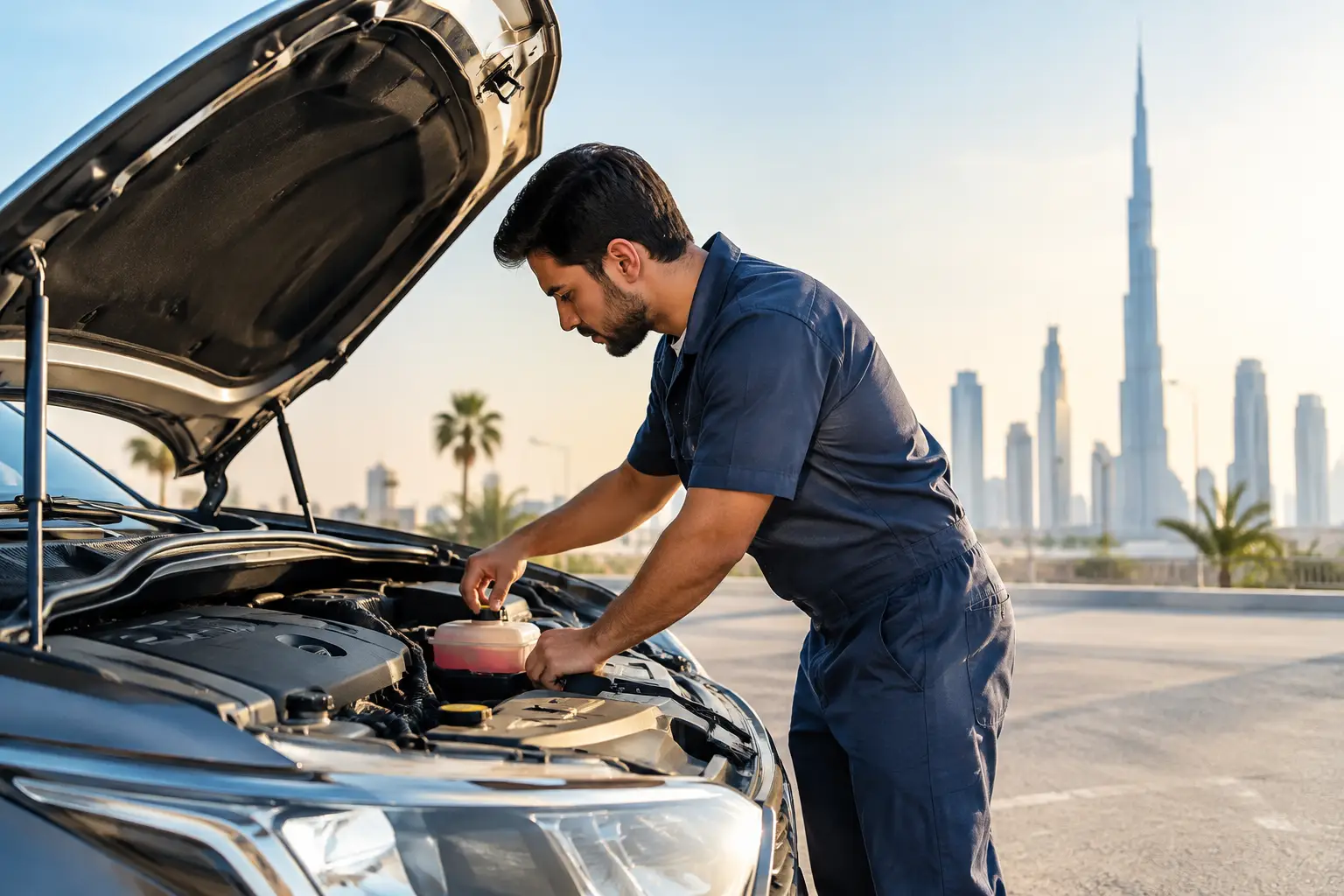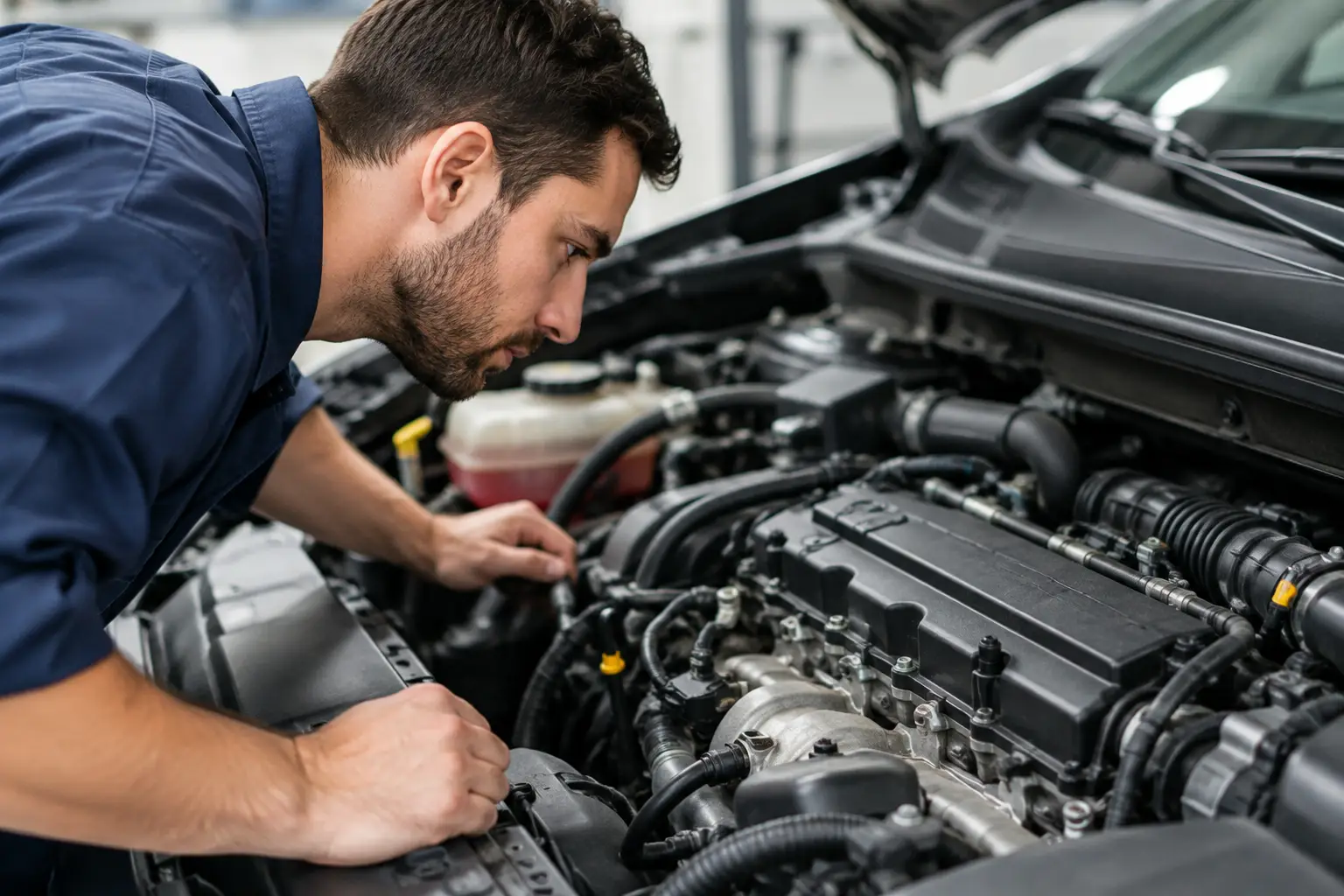
A door ding in a mall parking lot can look minor until the afternoon sun catches it. A bumper scuff can seem cosmetic until you notice a cracked mounting point or damaged parking sensor behind it. In Dubai, car dent repair is not simply about making a panel look better. It is about protecting paint, preserving resale value, and making sure a visible impact has not created a larger problem beneath the surface.
The right repair depends on the dent’s location, depth, paint condition, panel material, and the technology fitted behind it. A quick promise to “push it out” or repaint an entire side without proper inspection may be convenient for the garage, but it is not always the right answer for your vehicle.
What a Proper Dent Assessment Should Cover
A good body repair begins before tools touch the car. The technician should clean and inspect the affected area under proper lighting, then look beyond the obvious mark. On a modern vehicle, a small bumper impact may involve clips, brackets, radar mounts, parking sensors, cameras, or wiring. On a door, the dent may sit over a reinforcement bar where access is limited.
The first question is whether the paint surface is intact. If there is no crack, chip, or stretching in the paint, paintless dent repair may be possible. If the paint has broken, the metal has sharply creased, or the bumper has torn or distorted, conventional bodywork and refinishing are usually needed.
Material matters as well. Steel, aluminum, plastic bumpers, and composite panels do not respond in the same way. Aluminum panels require different handling from steel because they can stretch more easily and are less forgiving during reshaping. A workshop should identify the panel material and repair route rather than use a one-method approach on every vehicle.
Damage location also affects cost and repair time. A shallow dent in the center of a door is generally more straightforward than a crease along a body line, damage next to an edge, or a dent close to a sensor. This is why an accurate estimate should follow inspection, not a photo alone. Photos are useful for an initial indication, but they cannot always show paint damage, access restrictions, or hidden impact damage.
Car Dent Repair Dubai: Paintless or Conventional?
There are two main routes for car dent repair Dubai owners will encounter: paintless dent repair and conventional panel repair with paintwork. Neither is automatically better. The correct choice is the one that restores the panel properly without unnecessary work.
When paintless dent repair makes sense
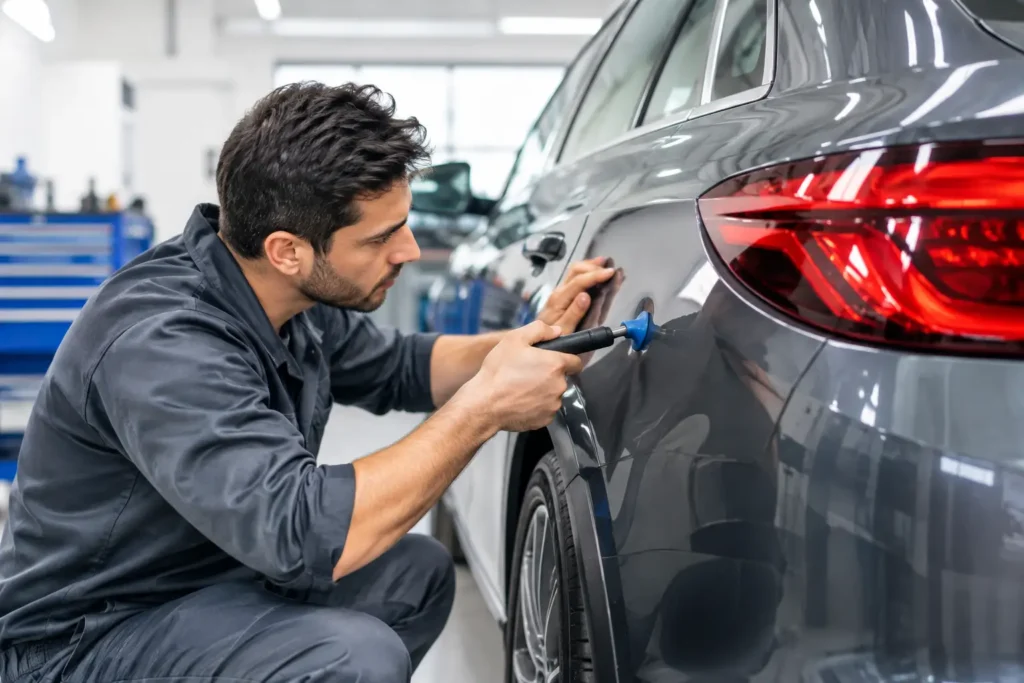
Paintless dent repair, often called PDR, reshapes the panel from behind or uses controlled pulling techniques from the exterior. Because the original paint remains in place, it can be an excellent solution for small parking dents, light hail-type damage, and shallow impacts where the clear coat and color coat are undamaged.
The advantages are meaningful. PDR usually takes less time than a repair requiring paint, avoids the risk of a paint-color mismatch, and helps retain the factory finish. It is particularly valuable on late-model vehicles and premium cars with original paint in excellent condition.
There are limits. A deep crease, stretched metal, a dent on a sharp contour, or damaged paint can make PDR unsuitable. Forcing a paintless result where the panel cannot return cleanly may leave distortion that becomes obvious in direct light. A responsible technician will explain when PDR can produce a near-perfect result and when conventional repair is the better long-term decision.
When panel repair and painting are needed
Conventional repair is appropriate when paint is chipped, cracked, scraped, or severely stretched, or when a bumper has split or lost its shape. Depending on the damage, the process may involve reshaping the panel, repairing plastic, using a measured amount of filler where necessary, priming, color application, and clear coating.
The quality difference is in the preparation. A low-cost repair may hide the damage briefly, then reveal sanding marks, poor texture, color variation, or peeling after heat exposure. Dubai’s sun is unforgiving on weak paintwork. Proper repair requires careful surface preparation, a controlled paint process, and polish work that blends the repaired area into the surrounding finish.
Not every repair requires painting an entire vehicle side. But paint blending may be necessary for certain colors, especially metallic, pearl, and tri-coat finishes. This is not automatically an upsell. It can be the practical way to prevent a repaired panel from looking noticeably different beside the original one. The workshop should explain why a blend is or is not recommended before the work starts.
Why Modern Cars Need More Than Cosmetic Attention
A dent on an older vehicle may be a straightforward bodywork job. On newer cars, it may sit beside systems that support parking, lane assistance, blind-spot monitoring, or collision avoidance. A bumper repair can involve sensor brackets and radar covers. A door impact can affect wiring, handles, window mechanisms, or side-impact components.
If a warning light appears after an impact, or a parking sensor behaves differently, ask for a diagnostic check alongside the body inspection. Repainting over a sensor issue does not solve it. Likewise, replacing a bumper without checking fitment and system operation can create trouble later.
This is especially relevant for electric vehicles, where high-voltage components, battery protection structures, and manufacturer repair procedures must be considered after more substantial impacts. Not every dent requires specialist EV work, but an EV should never be treated as just another body panel when the collision area is near underbody or structural components.
The Estimate Should Be Easy to Understand
Body repair has earned a poor reputation because many drivers have experienced vague explanations and invoices that grow after the vehicle is dropped off. There are legitimate reasons a repair can change once a bumper or trim piece is removed, but that does not justify surprise charges.
Before work begins, you should receive a clear explanation of the visible damage, the proposed repair method, and a quote that separates parts from labor. If the team finds additional damage after dismantling, they should contact you, explain what changed, and obtain approval before continuing.
Ask practical questions: Is the panel being repaired or replaced? Is paintless repair realistic for this dent? Will adjacent panels need blending? Are any clips, brackets, sensors, or trims damaged? Will the repair affect sensor calibration or require a diagnostic scan? Clear answers matter more than technical jargon.
At The Car Dr’s, this diagnosis-led approach is central to body repair: inspect the vehicle, explain the repair path, quote parts and labor clearly, obtain approval, and complete the work with accountability for the finish and function.
Choosing a Workshop Without Guesswork
A clean reception area alone does not prove bodywork quality. Look for a workshop that is willing to inspect the damage closely and discuss limitations honestly. Be cautious of anyone guaranteeing a perfect paintless result before examining the vehicle, or offering a repaint without explaining the preparation and color-matching process.
For luxury, performance, and late-model German, British, American, Japanese, Korean, Chinese, or electric vehicles, experience with the specific vehicle category matters. Panel materials, paint systems, trim removal procedures, and driver-assistance hardware vary widely between brands.
Convenience matters too, particularly when the car is drivable but you cannot lose a workday arranging repairs. Vehicle collection and return can make planned bodywork far easier, provided the workshop documents the condition of the vehicle at handover and keeps you informed throughout the process.
Protecting the Repair After Collection
Once the repair is complete, inspect the vehicle in daylight if possible. Look along the panel from different angles, check that body gaps are even, and confirm doors, trunk lids, sensors, cameras, and lights operate normally. On a painted repair, examine the finish for consistent gloss and color under natural light rather than only inside a workshop bay.
For freshly painted areas, follow the workshop’s curing advice. Avoid aggressive washing, abrasive polishing, or wax application until the paint has fully settled. If you notice an issue, raise it promptly. Good workshops prefer to correct a concern while it is clear and documented rather than let a customer live with a result they are unhappy with.
A dent does not have to become a lingering reminder every time you walk toward your car. The right repair starts with an honest inspection, follows the method the damage actually requires, and respects both the vehicle’s finish and the value of your time.