A Dubai commute can turn from routine to unbearable in minutes when the vents start blowing warm air. Car air conditioning repair Dubai drivers need is not simply a quick gas top-up. It is a proper diagnosis of why cooling performance dropped, followed by a clear quote and repair plan that protects both the car and the owner from repeat visits.
A weak A/C system is more than a comfort issue here. Extreme cabin temperatures can make school runs, client visits, and fleet routes exhausting, while neglected faults can spread from a minor leak or sensor issue to expensive compressor damage. The right time to investigate is when cooling first changes, not when it fails completely in mid-summer.
Signs Your Car A/C Needs Attention
The obvious sign is air that is no longer cold, but A/C faults are not always that straightforward. A system may cool well while driving and become warm at idle, or work in the morning before fading during the hottest part of the day. Those patterns give a technician useful clues about where the fault may be.
Pay attention if you notice a musty smell from the vents, reduced airflow, rattling when the A/C is switched on, water collecting inside the cabin, or a noticeable increase in engine effort. In some vehicles, the A/C system is linked to cooling fans, engine management, climate-control modules, and battery voltage. A warning light or intermittent electrical issue may therefore be part of the same diagnosis.
Do not assume every issue means a failed compressor. A blocked cabin filter can restrict airflow. A damaged condenser can reduce heat transfer. A small refrigerant leak can leave the system cool for a short period, then gradually less effective. The symptom matters, but the cause matters more.
Car Air Conditioning Repair in Dubai Starts With Diagnosis
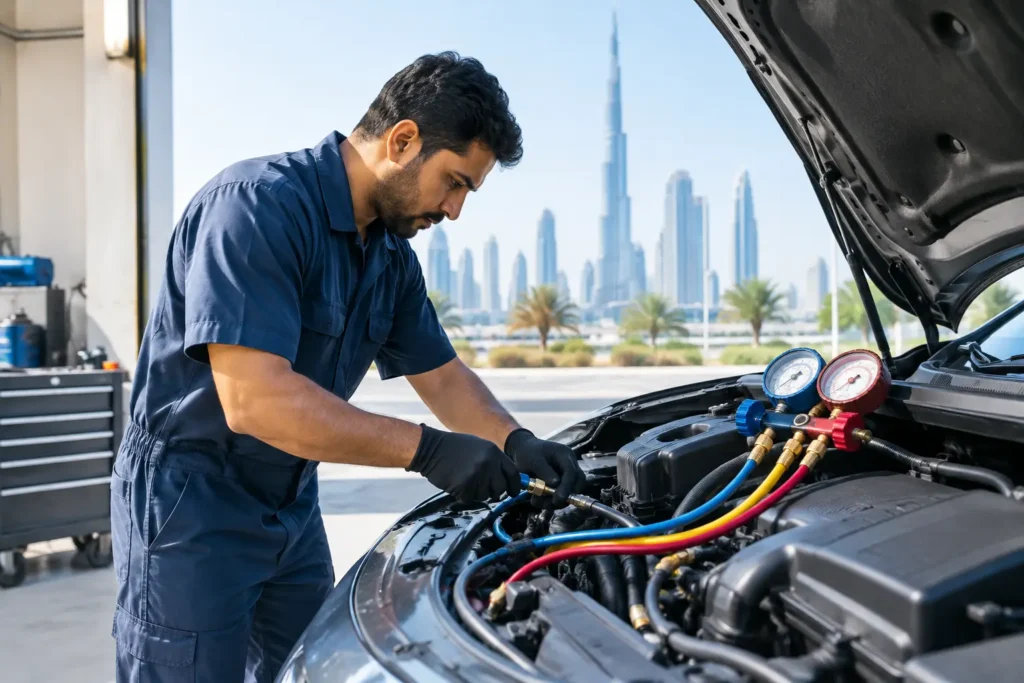
A responsible workshop should test before it quotes. That means checking vent temperatures, system pressure, refrigerant quantity and condition, compressor operation, cooling fans, electrical controls, and visible signs of leakage. Where required, leak detection may involve ultraviolet dye, electronic testing, or a nitrogen pressure test.
This is the difference between an A/C repair and an A/C recharge sold as a repair. Refrigerant does not normally disappear from a sealed system. If the level is low, there is usually a leak somewhere. Adding refrigerant may bring cold air back temporarily, but it can leave the original problem untouched.
At The Car Dr’s, the process is designed to be clear: inspect, diagnose, explain the finding, and provide a quote that separates parts from labor before work begins. If inspection reveals another issue after work starts, approval should come before any additional repair. That approach matters when an A/C fault sits behind panels, under the dashboard, or alongside an electrical problem.
Common A/C Faults and What They Usually Mean
A leaking condenser is common in Dubai because it sits at the front of the vehicle, exposed to road debris, dust, and heat. Condenser damage can range from a small puncture to corrosion around the joints. Depending on the vehicle, replacement may also require careful removal of bumper components, sensors, or shutters.
Compressor faults need more caution. A noisy compressor, seized pulley, or internal failure can circulate debris through the system. In that case, replacing the compressor alone may not be enough. The technician may recommend flushing relevant lines and replacing the receiver drier, expansion valve, or other contaminated components. It costs more than the quickest possible fix, but skipping those steps can put a new compressor at risk.
Evaporator leaks are another example of why diagnosis matters. The evaporator sits behind the dashboard, so access can be labor-intensive. A workshop should confirm the leak carefully before recommending dashboard removal. On the other hand, a leaking hose seal, pressure sensor, or service valve may be far simpler to repair.
Electrical faults can be equally misleading. Modern German, British, Japanese, American, and Chinese vehicles often use pressure sensors, control modules, variable-displacement compressors, and electronically controlled climate doors. The air may be warm because a sensor is sending an incorrect reading, a relay has failed, or a blend door actuator is stuck. Replacing mechanical parts without testing the electrical side can waste money.
Why a Cheap Recharge Can Become an Expensive Choice
There is a place for a recharge when the system has been opened for legitimate repairs, or when testing confirms there is no ongoing leak. But a very low-priced recharge with no meaningful inspection deserves questions. Was the refrigerant recovered and measured? Was the system vacuum-tested? Was a leak check performed? Is the refrigerant specification correct for the vehicle?
The trade-off is simple. A fast recharge may cost less today, but it can leave you booking another visit when cooling fades again. Proper testing takes longer, yet it gives the owner a basis for deciding whether to repair now, monitor a minor issue, or plan the work around a convenient date.
This matters especially for newer vehicles using R1234yf refrigerant, which requires the correct equipment and handling procedures. Electric and hybrid vehicles add another layer. Their A/C compressors may be high-voltage and use specific oil that must not be contaminated by incorrect equipment or conventional compressor oil. A workshop should identify the vehicle’s requirements before servicing it.
Protecting Your A/C Between Services
No owner can prevent every A/C failure in Dubai, but a few habits reduce unnecessary strain. Run the A/C regularly throughout the year, including during cooler months, to help circulate compressor oil and keep seals conditioned. Replace the cabin air filter at the recommended interval, or sooner if the vehicle is used frequently in dusty conditions.
When returning to a heat-soaked car, open the doors briefly before driving and use recirculation once the cabin begins to cool. This reduces the initial heat load. Keep the condenser area clear of heavy debris, and do not ignore an engine cooling fan problem just because the car has not overheated yet. The same fan may be critical to A/C performance at low speeds and while idling.
If there is a damp smell, weak airflow, or water on the passenger-side carpet, arrange an inspection early. A blocked evaporator drain or dirty evaporator can affect cabin comfort and air quality before it becomes a larger repair.
A Better Repair Experience for Busy Dubai Owners
A/C trouble is disruptive because it rarely arrives at a convenient time. You may be managing work, family commitments, deliveries, or a fleet schedule, and losing a day at a workshop adds to the frustration. Collection and return can remove that logistical burden, provided the workshop still communicates clearly about the diagnosis and authorization process.
For fleet operators, early reporting is particularly valuable. One vehicle with weak cooling can become a driver-retention issue or an unplanned route interruption. A planned inspection of filters, pressures, and cooling performance before peak summer is easier to manage than multiple urgent breakdown-adjacent bookings in July.
Ask for the fault in plain language, the options available, and the expected outcome of each option. You do not need to know every component under the hood. You do deserve to know why a part is being recommended, what labor is involved, and whether the repair is intended to solve the root cause or provide a temporary improvement.
When your A/C first stops feeling like relief from the heat, treat it as useful early warning. Booking a diagnosis while the system is still partly working gives you more time, more choices, and a far better chance of avoiding a sweltering drive home.